Kotlin-Native Interop with C/C++
Introduction
When developing with Kotlin-Native, many libraries are missing in the current version, so we need to supplement with C/C++. This article uses Linux as an example to demonstrate how to use C/C++ in Kotlin-Native.
Prerequisites
- IntelliJ IDEA Community
- JDK 17
- CMake
- Linux
References
Create an app using C Interop and libcurl – tutorial
Project Repository
Project Structure
└── c_link_demo
    ├── c_link_demo_c
    │   ├── CMakeLists.txt
    │   ├── library.c
    │   └── library.h
    └── c_link_demo_kt
        ├── build.gradle.kts
        ├── gradle
        │   └── wrapper
        │       ├── gradle-wrapper.jar
        │       └── gradle-wrapper.properties
        ├── gradle.properties
        ├── gradlew
        ├── gradlew.bat
        ├── settings.gradle.kts
        └── src
            ├── commonMain
            │   ├── kotlin
            │   │   └── Main.kt
            │   └── resources
            └── nativeInterop
                └── cinterop
                    └── c_lib_demo.def
Steps
Create the C/C++ Library
This example uses a C library.
Create the C Library
Create library.c and library.h in the c_link_demo_c directory. These files declare and implement a hello function.
library.h
#ifndef C_LIB_DEMO_LIBRARY_H
#define C_LIB_DEMO_LIBRARY_H

void hello(void);

#endif //C_LIB_DEMO_LIBRARY_H
library.c
#include "library.h"

#include <stdio.h>

void hello(void) {
    printf("Hello, World!\n");
}
Create CMakeLists.txt to compile the C library as a static library:
cmake_minimum_required(VERSION 3.27)
project(c_link_demo_c C)

set(CMAKE_C_STANDARD 11)

add_library(c_link_demo_c STATIC library.c)
Create the Kotlin-Native Project
Create a regular Kotlin (Gradle) project using IntelliJ IDEA, then modify build.gradle.kts:
import org.jetbrains.kotlin.gradle.plugin.mpp.KotlinNativeTarget

plugins {
    kotlin("multiplatform") version "1.9.21"
}

group = "one.tain"
version = "1.0-SNAPSHOT"

repositories {
    mavenCentral()
    google()
}

kotlin {
    fun KotlinNativeTarget.config() {
        binaries {
            executable {
                entryPoint = "main"
            }
        }
    }

    linuxX64("linuxX64") {
        config()
    }
}
After creating the project and building once, you’ll notice IntelliJ doesn’t recognize Kotlin files in the main directory. The default source and resource directories for native projects are src/nativeMain/kotlin and src/nativeMain/resources, so we need to adjust the project structure.
Create src/commonMain/kotlin in the project root, move Kotlin files from main to commonMain, create src/commonMain/resources, then delete the main directory.
You can now debug the Kotlin native application, though C interop is not yet set up.
Create the C/C++ Interop Configuration File
Create nativeInterop/cinterop/c_lib_demo.def in the project root:
headers = /home/sel/repository/selcarpa/c_link_demo/c_link_demo_c/library.h
staticLibraries = libc_link_demo_c.a
libraryPaths = /home/sel/repository/selcarpa/c_link_demo/c_link_demo_c/cmake-build-debug
Update the Build Script
Add the following inside the linuxX64 block in build.gradle.kts:
compilations["main"].cinterops {
    @Suppress("LocalVariableName") val c_lib_demo by creating
}
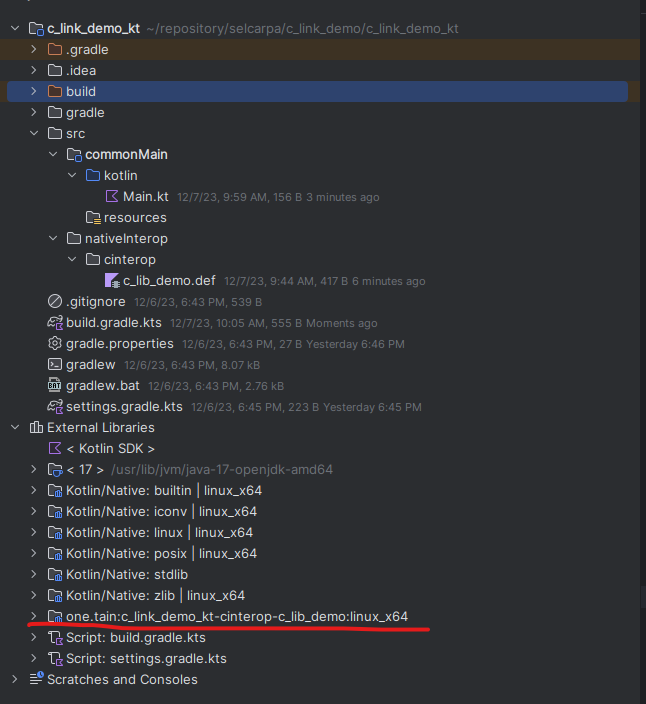
Click Build. You’ll see the c_lib_demo library loaded in IntelliJ’s External Libraries.
Call C Functions
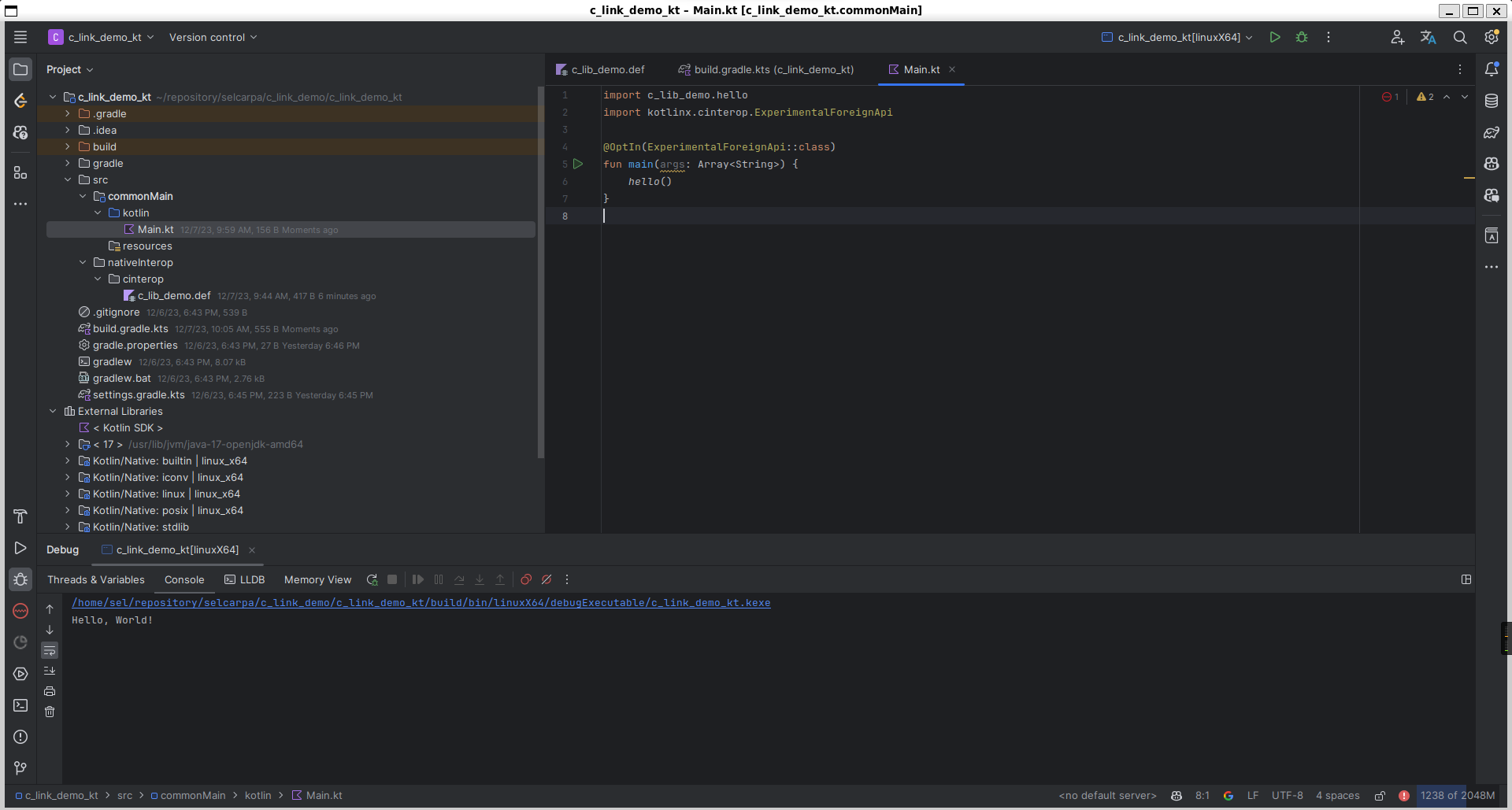
Modify Main.kt in commonMain:
import c_lib_demo.hello
import kotlinx.cinterop.ExperimentalForeignApi

@OptIn(ExperimentalForeignApi::class)
fun main(args: Array<String>) {
    hello()
}
Output:
Additional Notes
The c_lib_demo.def file supports other configuration methods:
headers = library.h
compilerOpts.linux = -I/home/sel/repository/selcarpa/c_link_demo/c_link_demo_c
linkerOpts.linux = -L/home/sel/repository/selcarpa/c_link_demo/c_link_demo_c/cmake-build-debug -lc_link_demo_c
This approach is more convenient for specifying platform-specific behavior.
This article is translated by deepseek-v4-flash (model: deepseek/deepseek-v4-flash).